When you have an existing concrete slab against the house and a tight budget, a kit veranda represents the shortest path to an additional living space. The assembly relies on prefabricated profiles delivered with screws, glazing, and instructions, ready to be assembled without the intervention of a professional installer. It remains to ensure the choice of material, glazing, and especially compliance with the local urban planning regulations, or risk having to dismantle everything.
Slab, threshold, and wall fixation: what conditions the assembly of a kit veranda
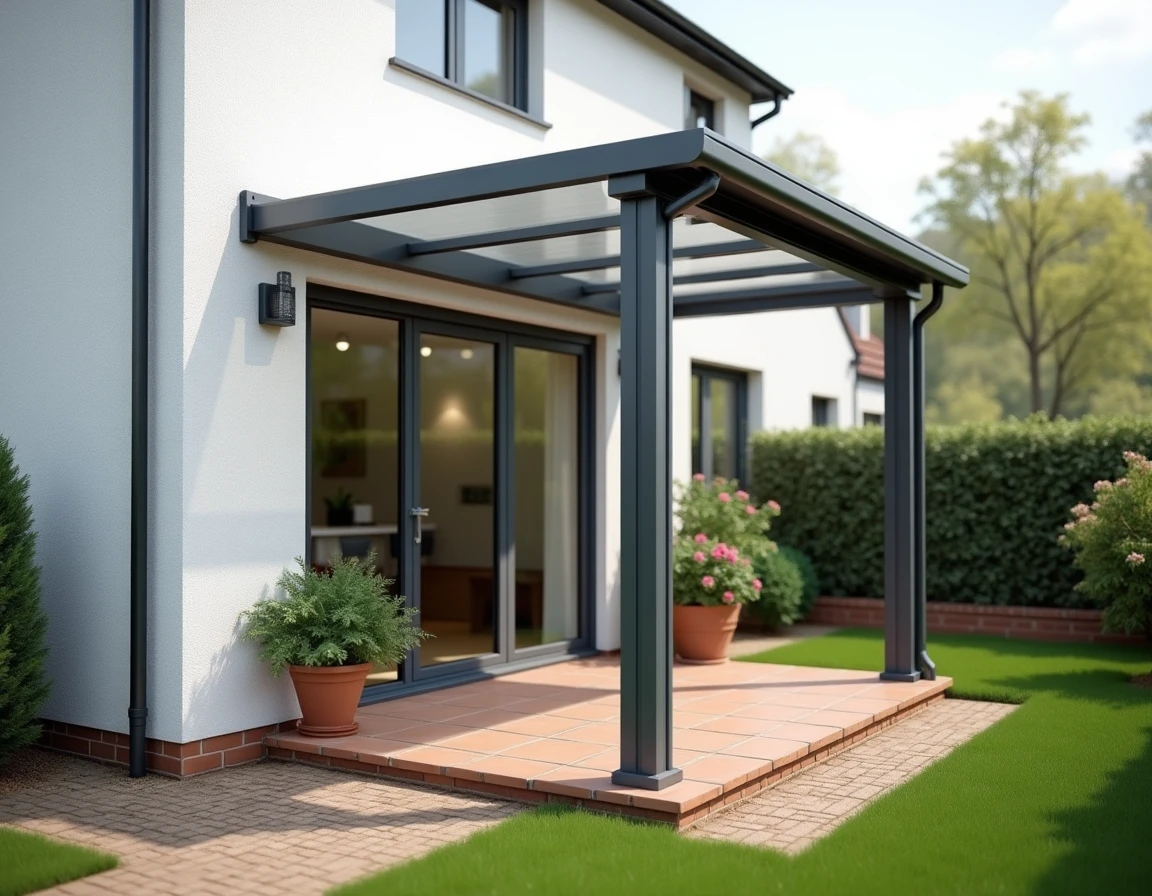
Before comparing catalogs, three points should be checked on-site. The first is the flatness of the slab. A level difference greater than a few millimeters along the length of the threshold creates leaks from the first storm. Re-leveling a slab with a self-leveling compound is inexpensive, but no one thinks about it before the kit is delivered.
The second point concerns the fixation to the wall of the house. The kits provide a wall profile (the “cap”) screwed into the facade. On a plastered concrete block wall, it’s simple. On external insulation (ITE), it is necessary to penetrate the insulation with suitable fixings; otherwise, the profile will pull everything down under the weight of the roof.
The third point: check the plumb of the lintel of the existing patio door. The junction between the patio door and the kit structure must be watertight. If the lintel is not straight, compensate with a flexible sealant, not with expanding foam that hardens and cracks in a few seasons.
For everything you need to know about the Brico Dépôt kit veranda, feedback confirms that the quality of the support preparation makes more difference than the kit itself.
Aluminum, PVC, or wood: which material for a low-cost kit veranda
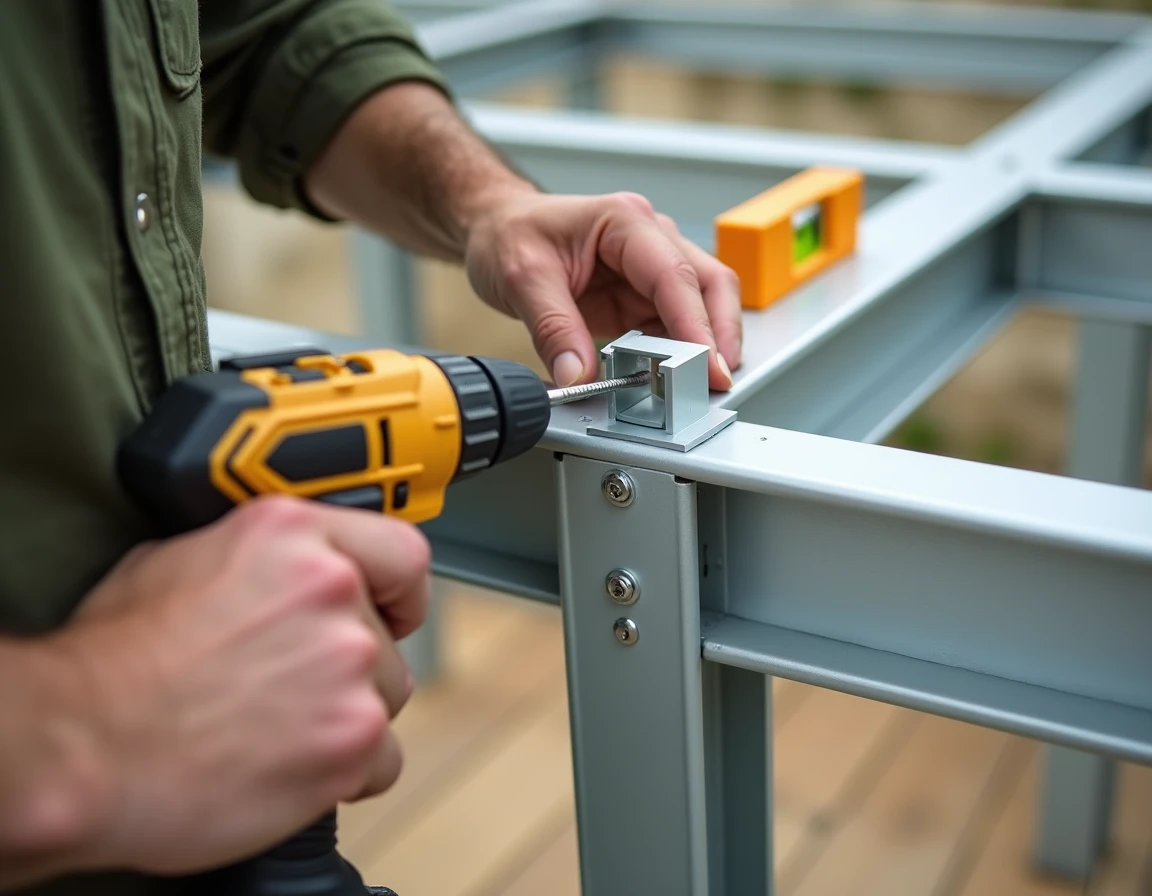
The three materials available in kits do not offer the same compromise on durability at all.
- Aluminum remains the most common in kits. It does not deform, does not rust, and accepts fairly wide glazing spans. Its weak point: without thermal break, the aluminum profile transmits cold directly inside, making the room uncomfortable in winter.
- PVC costs less per square meter and insulates better than raw aluminum. However, it yellows under UV light after a few years, and thick profiles reduce the glazed area. For a small veranda facing north or east, it is a defensible choice.
- Wood (often treated pine) provides a warm appearance but requires regular maintenance: staining or painting every three to five years, monitoring the joints that work with humidity. It is recommended if one is willing to dedicate time to it each year.
Over a ten-year horizon, the maintenance cost of wood often exceeds the savings made at purchase. Aluminum with thermal break costs more initially, but it only requires annual cleaning of the profiles and glazing.
Kit veranda or closed bioclimatic pergola: the real comparison
In recent years, an increasing number of homeowners are opting for a bioclimatic pergola equipped later with sliding glazing, rather than a classic kit veranda. The reasons relate as much to urban planning as to thermal comfort.
Urban planning constraints and acceptance by the PLU
A veranda, even in a kit, constitutes a closed and covered area. It counts towards the floor area calculation. Beyond a certain threshold, a building permit is required, and sometimes the involvement of an architect. The bioclimatic pergola, as long as it remains open on at least one side, is generally treated as an outdoor installation. PLUs more easily accept a pergola than a veranda, especially in protected areas or subdivisions with strict specifications.
Feedback varies on this point: some municipalities reclassify a fully glazed pergola as a veranda. It is advisable to submit a preliminary declaration in all cases to avoid disputes.
Thermal comfort and natural ventilation
The kit veranda, closed on all sides, heats up very quickly in summer. Without a roof shade or solar control glazing, the indoor temperature can become difficult to bear as early as spring. In winter, without effective insulating glazing, the opposite occurs: the cold penetrates through the walls.
The bioclimatic pergola, thanks to its adjustable slats on the roof, naturally ventilates the structure. Closed with sliding glazing, it offers a mixed use of terrace/winter garden that the kit veranda does not allow. Opening a glazed panel in thirty seconds radically changes daily use.
Total cost over ten years
For equivalent surface area, the purchase price of a bioclimatic pergola with glazing exceeds that of an entry-level kit veranda. The pergola does not require heavy foundations, and its maintenance is limited to cleaning the slats and rails.
It does not increase the taxable floor area in most cases. Over ten years, the total cost gap narrows significantly, or even reverses if the kit veranda requires additional insulation work to remain habitable year-round.
Glazing and insulation: pitfalls to avoid with a cheap kit veranda
The glazing represents the majority of the surface of a veranda. Choosing single glazing to reduce the price is akin to building a greenhouse: uninhabitable in summer, freezing in winter.
- Low-emissivity double glazing is the minimum for use as a living space. Some kits offer it as an option, while others include it from the outset.
- Thermal break connectors on aluminum profiles prevent condensation that runs down the posts and damages the floor.
- The polycarbonate roof, cheaper than glass, yellows and scratches over time. Plan for a replacement of the polycarbonate roof after eight to ten years if you want to maintain brightness.
Since the implementation of RE2020, several communities and consulting architects recommend reinforced insulation glazing and thermal break connectors, even on low-cost kits, as soon as the veranda is presented as a living space and not just a winter garden. A project refusal or a prescription for modifications remains possible if these elements are lacking.
The choice between a kit veranda and a closed bioclimatic pergola ultimately depends on the actual use you anticipate. For a closed space year-round with a controlled budget, the aluminum kit with double glazing and thermal break remains the most straightforward solution. For a seasonal, adaptable use, the glazed bioclimatic pergola deserves to be priced in parallel, especially if the municipality’s PLU complicates veranda projects.