The decor trends of 2024 are not limited to a color palette or a dominant style. Behind aesthetic choices, regulatory, health, and economic constraints are reshaping the way interiors are designed. We are witnessing a shift: interior decoration now incorporates measurable criteria that guide the choice of both paint and flooring.
COV Labeling and Decoration: A+ Rating as a Selection Filter
The classification of volatile organic compound emissions, mandatory in France since September 1, 2013, remains underutilized in decor guides. Construction and decoration products (paints, varnishes, glues, floor coverings, panels) carry a label ranging from A+ to C based on their VOC and formaldehyde emissions.
An A+ rated product does not guarantee a total absence of emissions. It indicates very low levels compared to lower classes. In practice, we recommend cross-referencing this rating with the existing ventilation of the home: an A+ covering in a room without efficient mechanical ventilation remains problematic.
This criterion changes the game for the decor trends of 2024, which highlight raw materials and natural textures. A lime plaster, wall cork, or bio-sourced paint are not all equal in terms of health. Checking the label before confirming an aesthetic choice becomes a professional reflex.
Those fond of vibrant colors, which are very present this year, should pay particular attention to the pigments used in saturated ranges, often more emitting than neutral shades.
To delve deeper into decor with Salon Tendances Habitat, this intersection between aesthetics and health performance constitutes a focus we see taking shape in professional trade shows.
PEMD Diagnosis and Reuse: When Decor Renovation Changes Regulatory Framework
The reuse of old materials is no longer a militant gesture; it is a regulated obligation. For demolition or significant renovation operations exceeding 1,000 m² of cumulative floor area, the PEMD diagnosis (Products, Equipment, Materials, and Waste) identifies reusable elements.
This framework modifies the decorative approach on several concrete points:
- Cement tiles, terracotta tiles, and reclaimed old floorboards from construction sites feed a second-hand market that structures material trends in interior decoration
- Period woodwork, handles, and ironwork become style elements accessible through reuse channels, with regulatory traceability
- Wood panels, beams, and disassembled structural elements can be reintegrated into a living room or bedroom decor project, provided their health compliance is checked (absence of lead, old insecticide treatment)
The vintage style and the trend for patinated materials, very visible in 2024, find here a legal and documented supply channel. We observe that regulated reuse goes beyond aesthetic thrift to become a lever for sustainable design.
Saturated Colors and Fluted Textures: The Choices That Structure Space
Vibrant colors dominate this year. Bright pink, orange, deep blue: color blocking is making a strong comeback after several seasons of beige neutrality. Applying a solid color on a single load-bearing wall creates a focal point without overloading the space.
We recommend limiting saturated colors to a reasonable maximum surface area in living spaces. Beyond that, the stimulating effect shifts towards visual fatigue. A saturated accent wall works better against matte and fluted textures that absorb light instead of reflecting it.
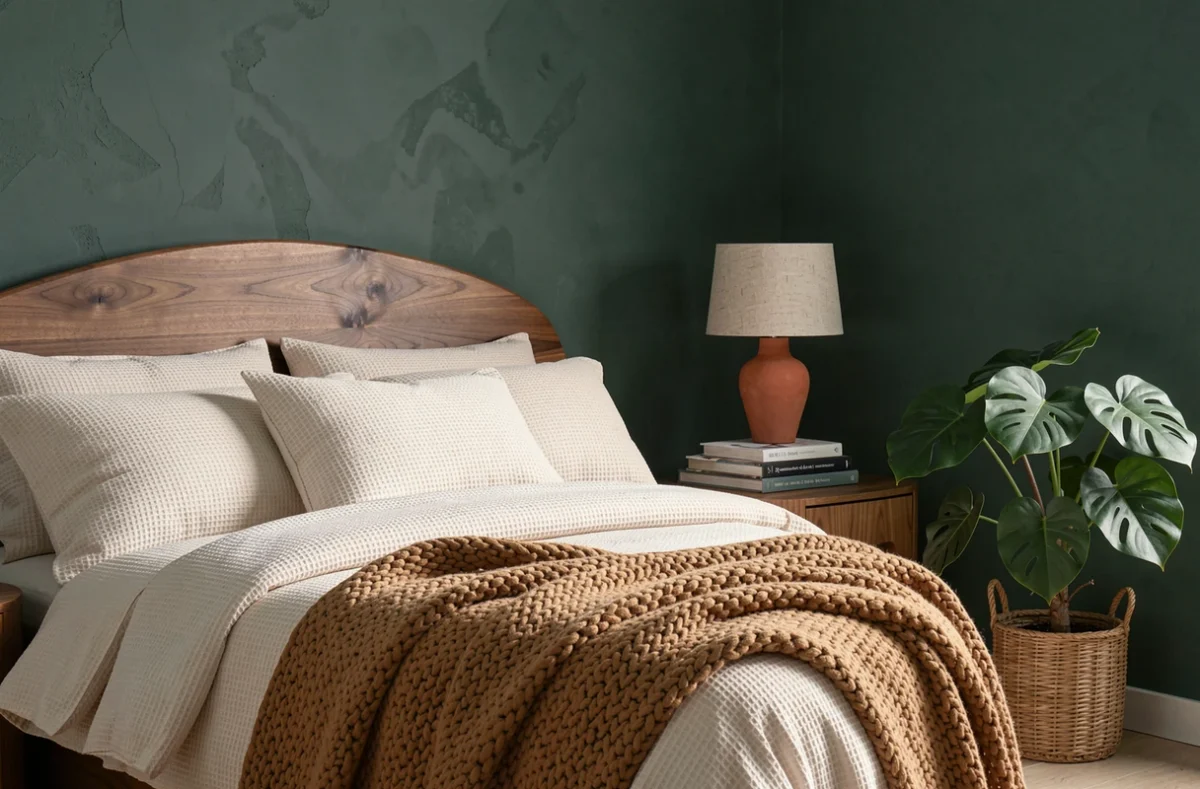
Fluted walls and laminated finishes are another strong marker of interior decoration in 2024. Vertical fluting visually elongates spaces with low ceilings. Wood paneling, applied as a headboard or as a living room wainscoting, adds a tactile dimension that smooth surfaces do not provide.
Combining Patterns and Materials Without Overload
The return of geometric and organic patterns in textiles (cushions, curtains, rugs) creates tension with textured surfaces. The rule we apply: no more than two types of patterns per room, on different supports. A geometric patterned rug coexists with a solid fluted wall, not with floral patterned wallpaper.
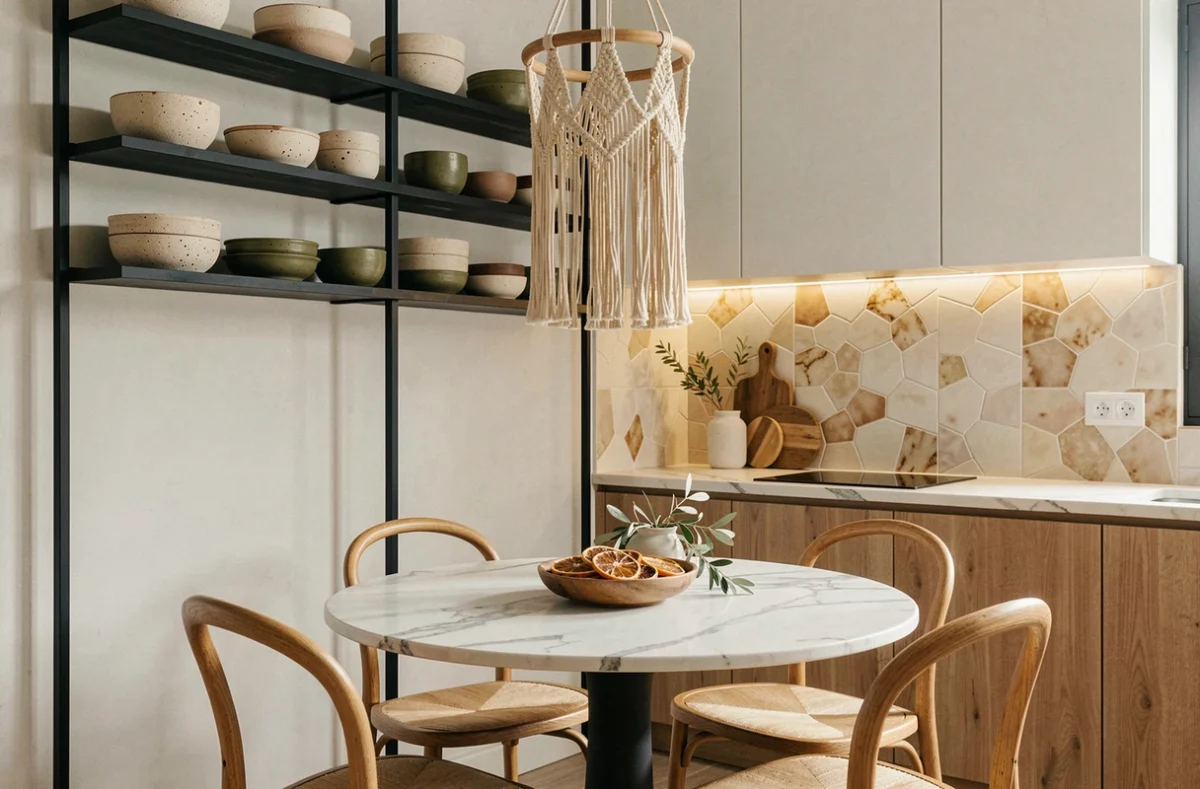
Natural textures (raw linen, boucle wool, rattan) serve as a binding element between strong items. Their chromatic neutrality allows them to absorb contrasts without adding visual noise.
Furniture with Organic Shapes: Comfort, Ergonomics, and Space Constraints
Curved lines and rounded shapes dominate furniture in 2024. Enveloping armchairs, tables with curved edges, modular sofas: design incorporates an ergonomic dimension that straight-lined furniture neglected.
This choice has a direct practical consequence. Rounded furniture occupies more floor space than its straight-lined equivalents. In small spaces, a rounded sofa with the same seating capacity as a straight model takes up significantly more room. The planning phase, with measurements taken, is no longer a luxury but a necessity.
Chrome and brushed metal materials are making a comeback on legs and lighting fixtures, contrasting with textile seating. This interplay between cold and warm surfaces enhances the feeling of comfort without falling into the total cocooning look that quickly becomes tiresome.
- Chrome legs on velvet or boucle seating: the most recurring contrast in 2024 collections
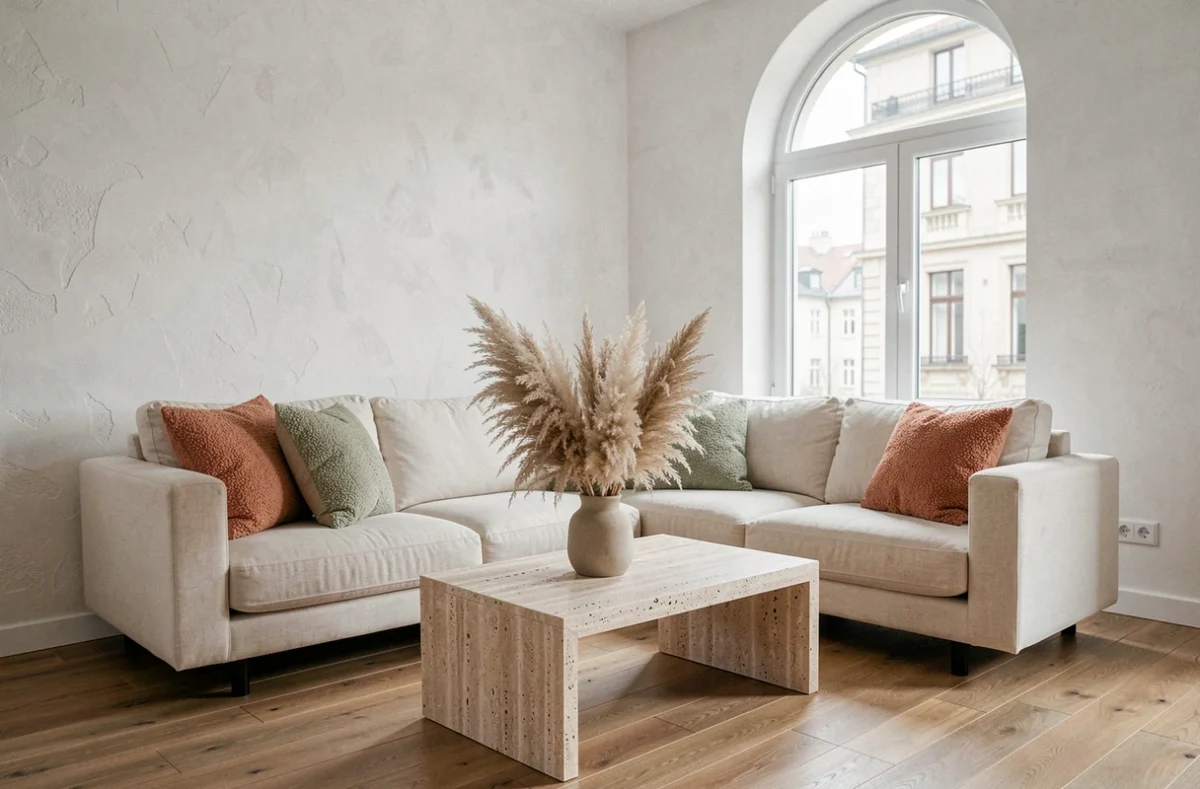
- Low tables in reconstituted stone or travertine: organic shapes but demanding maintenance (porosity, sensitivity to acidic stains)
- Sculptural metal lighting fixtures: they replace minimalist pendants and become the central element of the living room
The decor trend of 2024 marks a return to more assertive interiors, where every choice (color, texture, furniture) is based on both technical and aesthetic considerations. Materials are chosen first for their performance, then for their appearance – it is this reversal of priorities that distinguishes successful projects from mere style exercises.