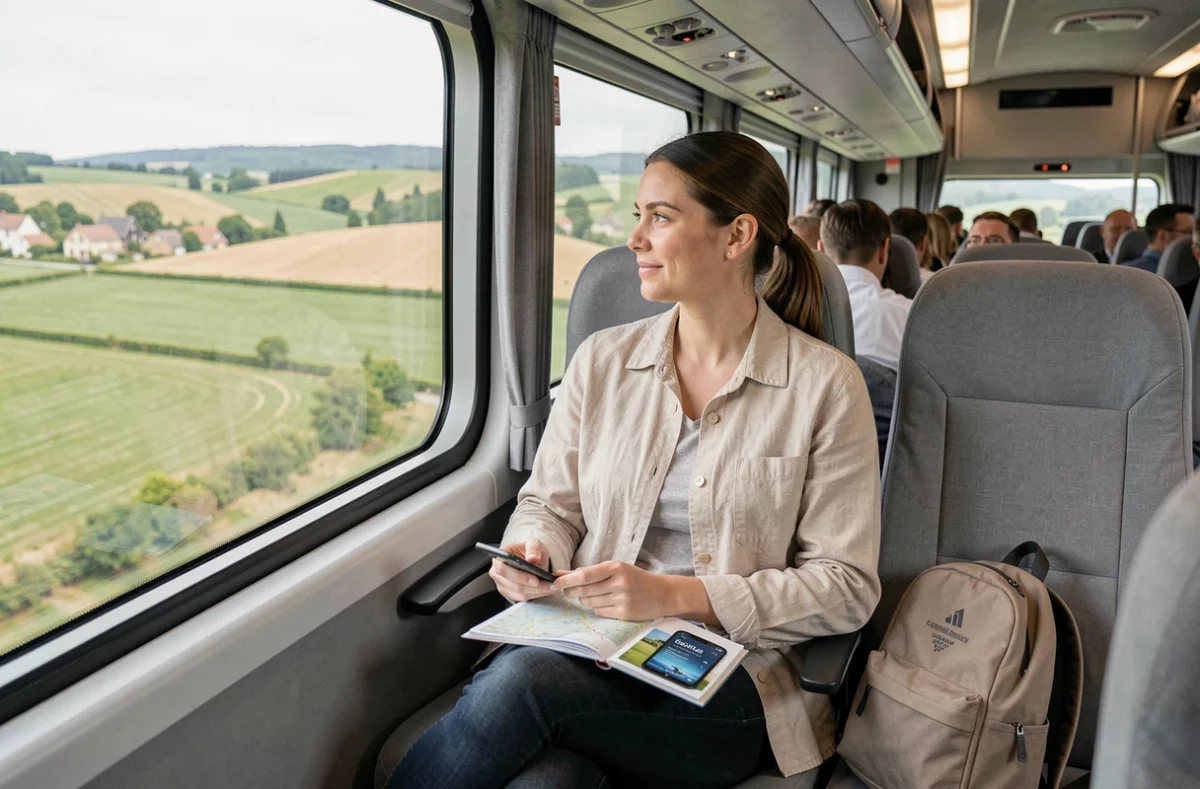
The long-distance bus market in France has changed significantly since the liberalization of intercity routes. Modern coaches are equipped with air conditioning, USB ports, and sometimes Wi-Fi, and they offer fares that are significantly lower than trains or planes on many routes. Organizing a comfortable and economical bus trip requires going beyond simply booking the cheapest ticket to examine what actually happens before, during, and after the journey.
Accessibility of bus stops: the weak point that comparators do not show
Travel guides for coaches extensively detail onboard comfort, reclining seats, and legroom. They overlook a concrete difficulty: only 61% of priority bus and coach stops are accessible nationwide, according to a report by Cerema published in 2025.
A coach equipped with a ramp is not very useful if the departure or arrival platform does not allow access. For a traveler with reduced mobility, as well as for anyone carrying bulky luggage or accompanied by young children, the verification must focus on three distinct elements: the vehicle, the departure stop, and the arrival stop.
Since June 28, 2025, the digital interfaces of coach transport companies must comply with digital accessibility requirements stemming from the European Accessibility Act. Electronic ticketing, real-time information, service data: all of this should theoretically be accessible. Field feedback varies on this point, as the exemptions provided by the text leave room for interpretation by operators. Before booking, testing the booking process oneself remains the most reliable method.
Several companies offer their routes on comparison platforms, and the site https://www.voyagenbus.com/ lists bus connections across France, making it easier to find suitable itineraries.
Carbon footprint of long-distance buses: what the available data says
The coach is regularly presented as the least CO₂ emitting mode of land transport per passenger-kilometer. The available data confirms this general trend, but comparisons deserve some clarifications.
Several online tools allow for comparing CO₂ emissions between trains, cars, and coaches on a given route. The results vary depending on the vehicle’s occupancy rate, the engine type, and the type of railway line (electrified or diesel).
- A well-filled coach emits significantly less CO₂ per passenger than a private car on the same route, sometimes in a ratio of one to three or four.
- Compared to electric trains, the coach remains more polluting, but the gap narrows on non-electrified or low-traffic railway lines.
- The bus occupancy rate is the determining factor: a half-empty coach loses much of its environmental advantage.
For a traveler looking to minimize their footprint without a direct train connection, the bus often remains the best compromise. On short urban routes, the metro or tram takes the lead.
Bus ticket price versus train and carpooling: comparing the real cost
The displayed price of a bus ticket is almost always lower than that of a train on an equivalent Paris-province route. This price difference masks some variables that comparators do not automatically integrate.
Travel time and hourly cost
A Paris-Lyon trip by coach takes several hours longer than a TGV. The extra time spent on the bus is time not worked or not utilized otherwise. For a traveler who values their time, the cheapest ticket is not always the most economical trip once the duration is factored into the calculation.
Often overlooked additional costs
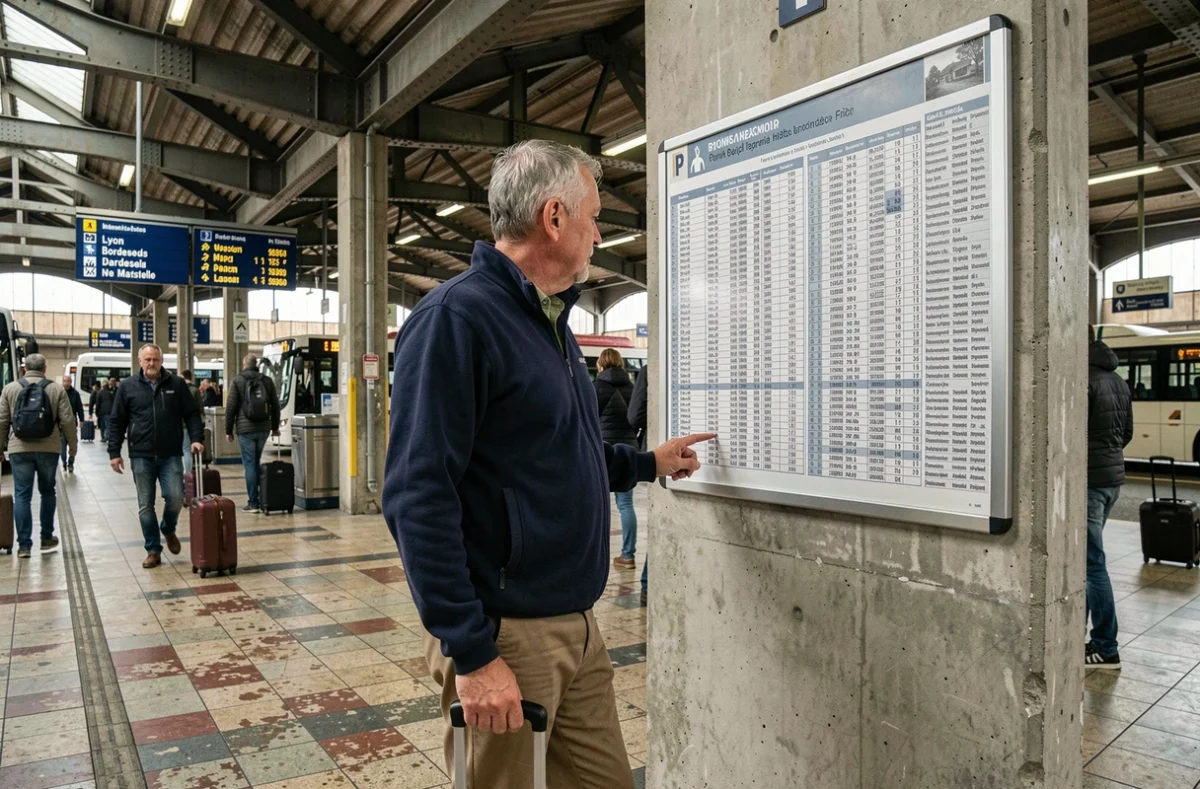
The departure bus station is sometimes located on the outskirts, which means a trip by urban transport or taxi to reach it. Upon arrival, the same observation applies. These access costs can represent a significant portion of the total budget, especially on very low-priced tickets.
Carpooling, often positioned as a direct competitor to the bus, presents a different risk profile: last-minute cancellations, variable meeting points, and lack of time guarantees. The bus offers a regularity that carpooling cannot guarantee, which is particularly important for journeys with connections.

Real onboard comfort of a coach: what varies from one company to another
Next-generation coaches (Euro 6 standards and electric models) have significantly raised the comfort level compared to vehicles from ten years ago. The amenities advertised on booking sites do not always reflect the reality onboard.
- Onboard Wi-Fi works unevenly depending on the areas crossed. On well-covered highways, the connection holds. In rural or mountainous areas, it becomes intermittent.
- The space between seats varies from one coach model to another. Two companies operating the same route may offer very different spacing.
- Air conditioning, often set aggressively, remains one of the primary sources of discomfort reported by regular travelers. Bringing an extra layer even in summer is less of a trivial piece of advice than a tested necessity.
- Breaks are generally spaced two to three hours apart, but their duration and location depend on the driver and the route. Not all highway rest areas are equal.
The quality of the journey also depends on the occupancy rate. A full coach on a Friday night does not offer the same experience as a midweek departure with empty seats around.
Organizing a comfortable and economical bus trip in France requires checking more than just the ticket price. The actual accessibility of stops, the total cost of the journey including transfers to the bus station, and the actual conditions onboard vary enough from one connection to another to justify thorough research before each booking.