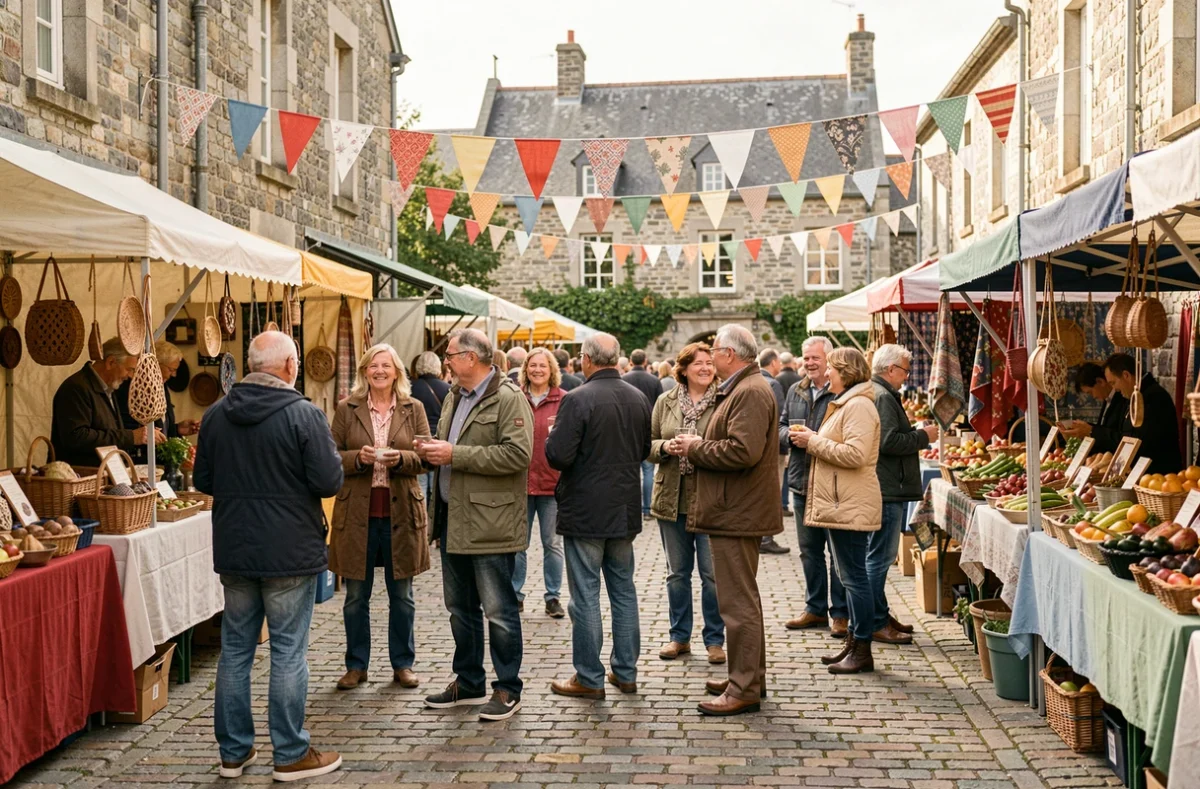
Guingamp and its surrounding area pack a remarkable range of initiatives into a catchment area of just a few tens of thousands of residents—well beyond the usual cultural calendar. With the permanent closure of the maternity unit announced by the Brittany Regional Health Agency (ARS) in November 2026, regional funding directed to the area, and new community groups emerging, this town in Côtes-d’Armor is going through a period in which local projects serve as both a social glue and a showcase.
Regional funding in Guingamp: where Brittany’s investment is going
The Brittany Regional Council has outlined its investments in the Guingamp-Paimpol area for the period from summer 2025 to summer 2026. Funding is not limited to secondary schools and road infrastructure: it also targets biodiversity, ecological connectivity, the GwinZegal art centre, the Champ-au-Roy theatre and the Roudourou stadium.
This focus on culture and sport reflects a desire to maintain key facilities in a mid-sized town. The Champ-au-Roy, for example, is more than just a performance venue: it hosts artists in residence, provides educational resources for nearby schools and serves as a gathering place for charity events such as the Téléthon.
To keep up with the latest news from Guingamp, the inter-municipal authority brings together announcements about these schemes, making it easier to spot calls for participation before they close.
Local initiatives in Guingamp: who keeps them going after launch?
Announcing a project is one thing. Keeping it going is another. Several recent initiatives show how projects move from announcement to everyday reality, serving very different groups.
La Maison des parents, rue Auguste-Pavie
Located on rue Auguste-Pavie, this centre welcomes everyone, with no conditions attached. It offers a listening ear, guidance and opportunities for families to meet. Its open-door approach sets it apart from traditional social services, which are often subject to income thresholds or require people to complete administrative procedures in advance.
The open question is whether families will continue to use it over time. An open-access centre can only thrive if families know it exists and feel entitled to use it—neither of which can be taken for granted in an area where services are spread across several municipalities.
A remote-control car club in Grâces
A model car club for electric remote-control cars has opened in Grâces, a neighbouring municipality of Guingamp. The municipality is providing a site, and the club plans to hold an amateur championship in the spring.
Model car racing attracts people who do not usually take part in traditional cultural or sporting activities. This kind of small association fills a gap: adult enthusiasts, often isolated in their hobby, find a sense of community thanks to the simple loan of a municipal site. Its long-term viability will depend on how many members are willing to help organise competitions, not just take part in them.
Students take to the Champ-au-Roy stage
Primary school pupils and Year 7 students take to the stage with Compagnie 13/31 as part of the Méduse et Merveille project. Pupils from La Chesnaye school and Jacques-Prévert secondary school will take part in workshops scheduled for January, with performances planned for February 2027.
This project reflects a broader trend in the cultural policies of Brittany’s mid-sized towns: using publicly funded venues as educational tools, not just as places to stage performances. The Champ-au-Roy theatre thus serves a dual purpose, which partly justifies the regional funding mentioned above.
Téléthon in Guingamp: a snapshot of the local community network
The 2026 Téléthon in Guingamp is about more than fundraising. The programme includes several activities designed to appeal to different audiences:
- A night walk and run, attracting both regular athletes and families looking for an organised evening outing
- An afternoon of tennis and pickleball, a fast-growing sport that can draw in younger people and those less familiar with traditional clubs
- A race for primary school pupils, organised in partnership with local schools
- A musical performance to close the event, bringing people together after the sporting activities
Four different activities over a single charity weekend: this approach offers people several ways to get involved. Here, the Téléthon highlights how many associations can coordinate their efforts over a short period, from tennis clubs to neighbourhood committees.
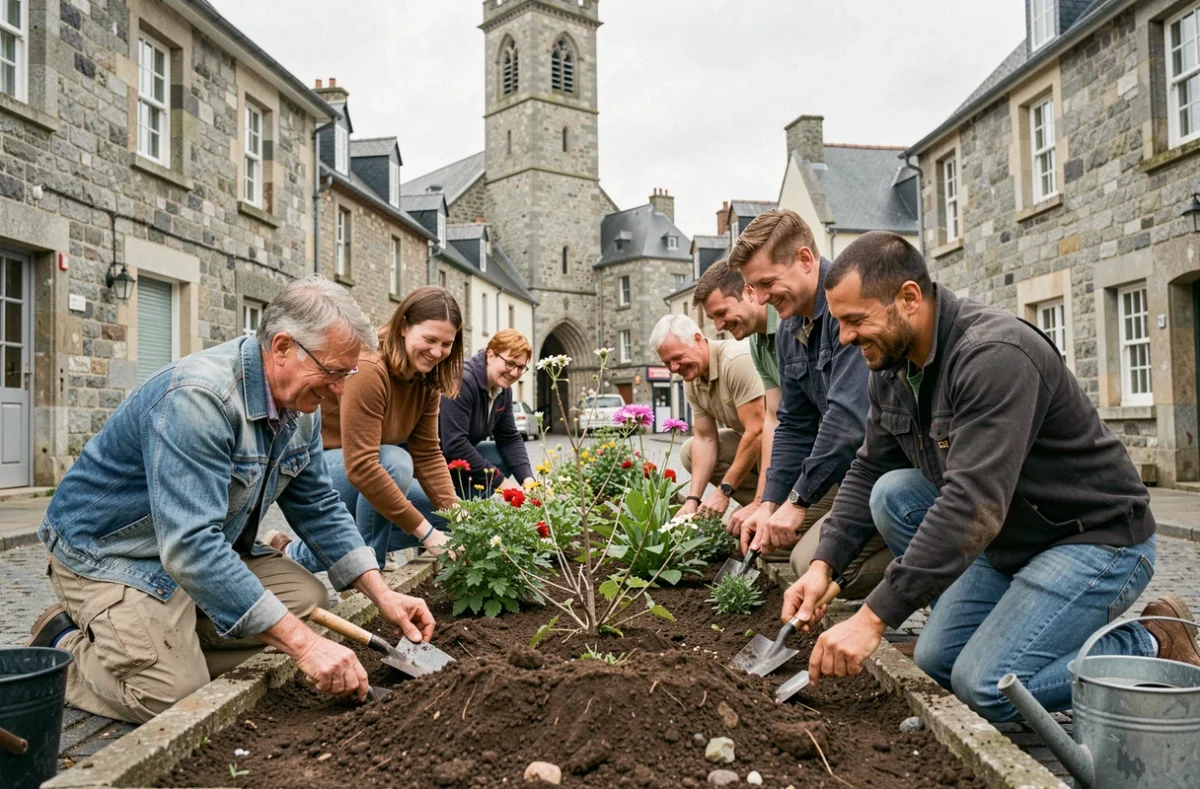
Community life in Côtes-d’Armor: the visible limits of volunteer-led initiatives
The Maison des parents, the model car club and the Téléthon all have one thing in common: volunteers. Each initiative depends on a small group of people handling logistics, communications and welcoming visitors. Without new volunteers stepping up, these projects lose momentum within two or three years.
The closure of Guingamp’s maternity unit, confirmed by the ARS in November 2026, was a reminder that civic action is not always enough to reverse an institutional decision. This weighs on the morale of local associations: the energy spent defending a public service can discourage people from getting involved in other causes.
There is not enough data to accurately measure volunteer retention across the area. The inter-municipal authority rarely publishes reports on local associations, and there is no local volunteer observatory to track changes over time.
Guingamp’s initiatives can thrive as long as they have a stable pool of people to rely on. Regional funding provides the buildings and facilities. Volunteers provide the substance, and that is where the chain remains most vulnerable.