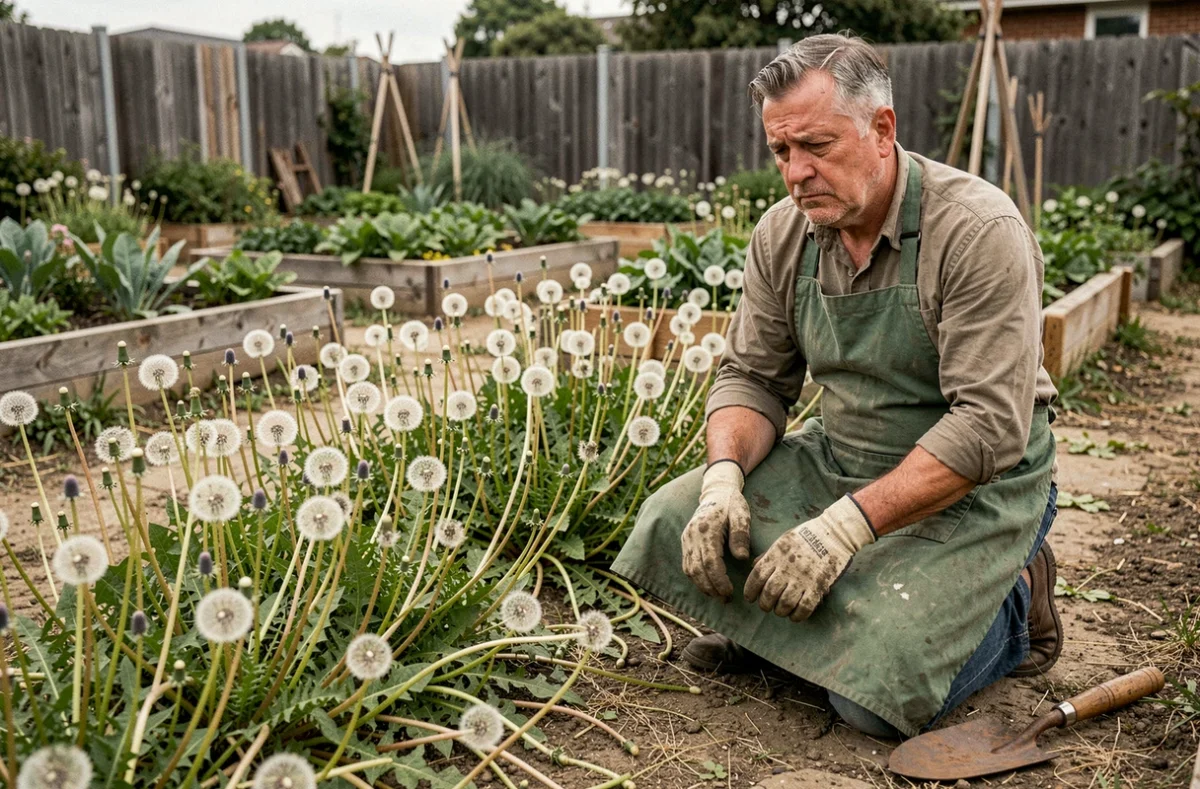
A flower bed mulched three months ago, yet bindweed is pushing back through the wood chips. A patio pressure-washed in April, covered in plantain by June. We’ve all had that moment when the garden seems to be mocking our efforts.
The real frustration for a gardener isn’t hating weeds—it’s seeing them come back faster than we can pull them out. Often, the problem isn’t a lack of effort or the wrong product: it’s a misunderstanding of what fuels their return.
Seeds carried by the wind: the real reason weeding never ends
We think of roots, rhizomes and runners. And for good reason: couch grass and bindweed grow back from stubborn underground fragments. But in most cases, on a path, patio or vegetable patch, it’s seeds carried in by the wind that restart the invasion.
FREDON Auvergne recommends tackling the problem early by removing seeds that collect in joints, cracks and along paving edges. Simply sweeping a patio regularly reduces the number of seeds that can take root far more effectively than applying a treatment after they have germinated.
The usual instinct is to wait for weeds to grow before pulling them out or treating them. We can look at the gardener’s greatest frustration with weeding from a different angle: weed control starts before germination, not after.
In a vegetable garden, that also means keeping an eye on the surrounding areas. A strip of bare soil along the edge of a plot acts as a landing strip for dandelion, groundsel and chickweed seeds. Covering these areas with a thick layer of mulch or a green manure crop helps prevent them from taking hold in the first place.
Homemade weedkillers: what garden regulations actually prohibit
Dozens of recipes circulate on social media: white vinegar, diluted bleach, salt, boiling cooking water. People use them because they seem harmless. Not all of them are.
ANSES has warned about the risks of using products in ways they were not intended for, particularly mixing bleach with an acid (including vinegar), which can release chlorine gas. The agency recommends using only products labelled “Authorised for use in gardens” and following the instructions on the label.
White vinegar sold in food or cleaning aisles is not authorised for sale as a weedkiller. The intended use is what matters: a household product does not become an approved herbicide just because an online tutorial suggests using it that way.
The Labbé Law and the areas it covers
The framework established by the Labbé Law does not apply only to private gardens. It has been extended to several types of shared and residential spaces, with a deadline of 1 July 2022. Some biocontrol and low-risk products are exempt, but you need to check which rules apply to the specific location.
In practice, this means that a co-owner who treats shared paths with a conventional synthetic herbicide risks breaking the law, even if they are doing it “for the good of the residents”. The legal landscape has changed, and most amateur gardeners still don’t know it.
Mulch and ground cover: why they don’t always do the trick
Mulching remains the most widely recommended preventive method. In principle, it works: an opaque layer blocks light, slows germination and retains moisture. But in practice, results vary depending on the depth, material and upkeep.
- Organic mulch (straw, wood chips, fallen leaves) breaks down within a season. If it isn’t replenished, weeds will recolonise the surface as soon as the layer becomes just a few centimetres deep.
- Wood chips and pine bark last longer, but their acidic pH doesn’t suit every plant. Around a vegetable garden, straw or hay is a better choice, even if it needs topping up more often.
- Mulch laid over soil already infested with perennial weeds such as couch grass or bindweed won’t stop them from pushing through. First, you need to weaken the roots by pulling them out repeatedly before covering the soil.
- Mulch has no place on a gravel path. Paving joints or polymeric sand provide the barrier instead.
Mulching isn’t a one-size-fits-all solution. It’s one tool among many, and it works best when suited to the situation and replenished over time.
Tolerating some wild plants: a gardener’s choice, not an admission of defeat
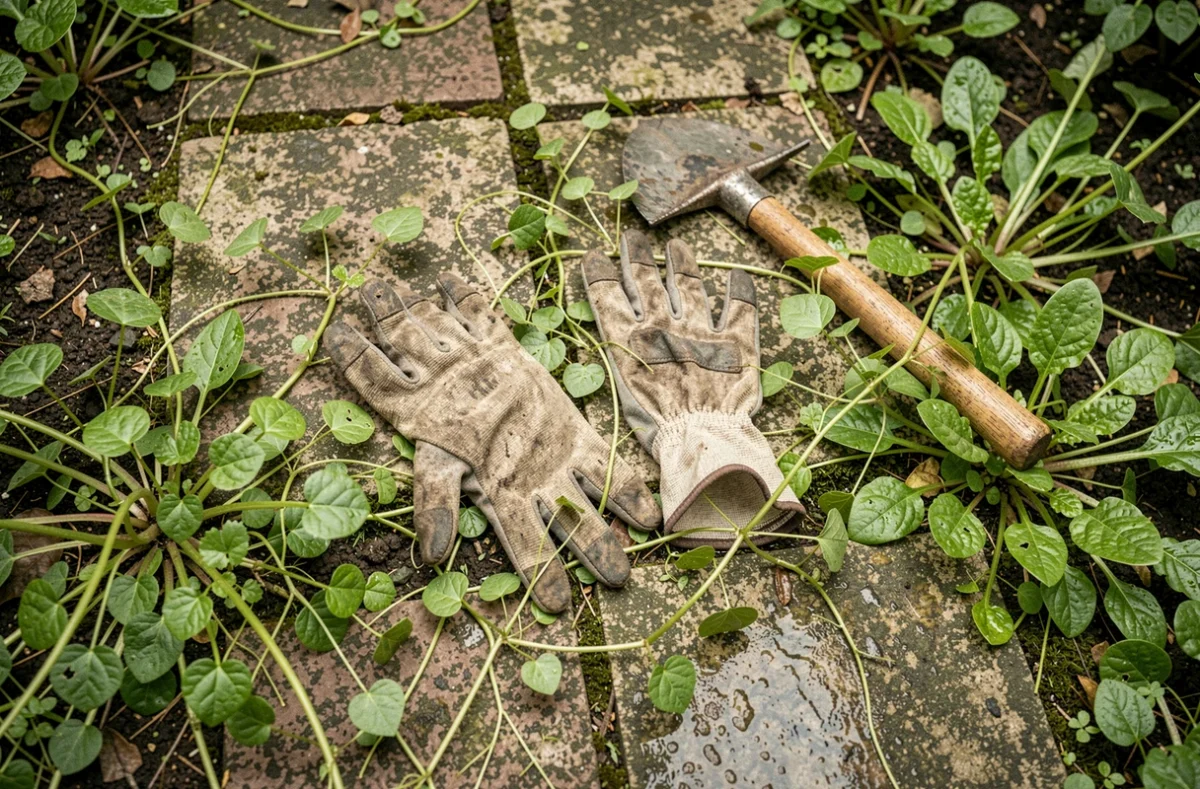
White clover fixes nitrogen in the soil. Plantain is a sign of compacted soil. Slender speedwell covers the ground and helps prevent erosion. Yet all these plants are labelled “weeds” as soon as they appear in a closely mown lawn.
Trying to achieve a perfectly pristine lawn is a gardener’s greatest folly, far more so than seeing a few dandelions bloom in April. Some wild plants serve useful purposes: they feed pollinators, protect bare soil and signal an imbalance that needs correcting.
Tolerating weeds doesn’t mean letting everything grow. You can choose to keep clover in the lawn and pull thistles from the vegetable garden. The decision depends on the area of the garden, how it is used and how much competition the weeds pose to your crops.
Tailor your approach to each area of the garden
- In lawns, accepting clover and daisies means less frequent weeding without compromising appearance.
- In vegetable gardens, weeding is still necessary around young plants that cannot cope with root competition.
- On patios and paths, mechanical cleaning (brushing, sweeping and hot water) remains the safest method and the one most in line with regulations.
Your approach to weeding changes when you stop aiming for total eradication. Managing weeds area by area takes less effort than treating the entire garden with the same intensity. And the garden itself will be better for it.