
In France, recycling guidelines vary by municipality and often prohibit the collection of thick plastic items like cutting boards. However, a damaged board can become a real breeding ground for bacteria, posing concrete health risks.
Maintenance and replacement habits for these utensils remain unclear for many, despite recommendations from health authorities. It’s impossible to rely on simple washing when deep scratches accumulate. Solutions exist to limit risks and adopt better practices in daily life.
Why a worn plastic cutting board can endanger your health
Over time, a plastic cutting board endures multiple knife strikes. Gradually, deep grooves form on its surface, becoming real hiding places for bacteria. This is where microorganisms like Escherichia coli, Salmonella, or Listeria can settle and survive, even after thorough washing. The damaged appearance of the board promotes bacterial proliferation, with an increased risk of cross-contamination between raw and cooked foods.
When stains persist or persistent odors set in, it’s a warning: the board has reached the end of its life. Using such an utensil in this condition exposes you to foodborne illness. Worse, repeated friction can release microplastics, invisible to the naked eye but present in dishes. These particles accumulate in the body, and health issues are still largely undocumented.
Be vigilant: as soon as signs of wear appear, marked scratches, indelible stains, or a roughened surface, it’s time to consider where to dispose of a plastic cutting board to limit risks of contamination and exposure to microplastics.
This seemingly trivial action has direct consequences on the food safety of your home. A tool as common as a cutting board deserves attention as soon as it shows signs of fatigue.
When and how to dispose of your board without harming the environment
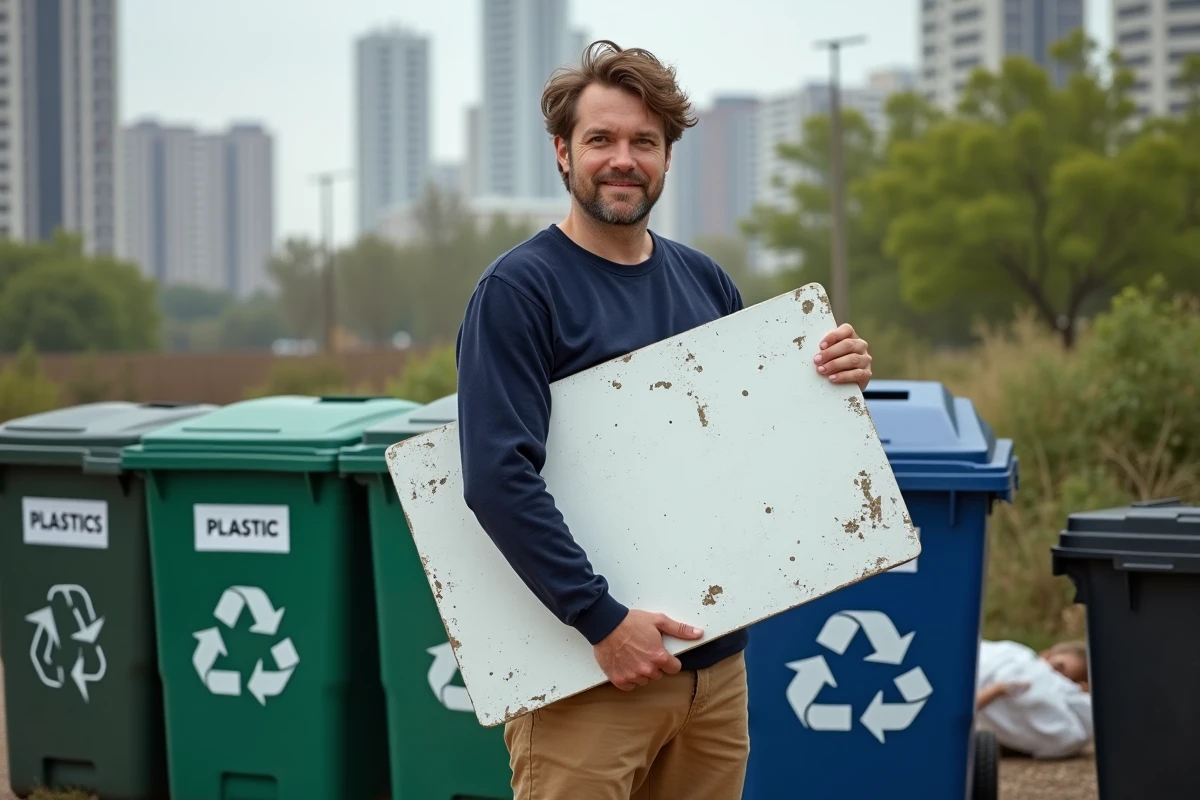
Throwing away a plastic cutting board is never trivial. This type of utensil, often marked by deep grooves, cannot go into compost or with organic waste. Plastic, a synthetic material, does not break down in nature and can leach undesirable substances. Municipalities generally exclude cutting boards from standard recycling: their plastic, high-density polyethylene or polypropylene, does not join the usual recycling streams.
Before discarding it, extend its lifespan in other ways: it can be used for crafts, support flower pots, or serve as an extra work surface. Once food safety is compromised, the board must end up in the household waste bin. In most municipalities, this type of thick plastic is then incinerated.
In some areas, recycling centers accept hard plastic items. Take the time to check with your town hall or the community website if a collection point exists near you. This reflex prevents the board from ending up in an inappropriate and polluting stream.
To avoid mistakes during disposal, keep these simple guidelines in mind:
- Never leave a plastic cutting board outside, abandoned in the environment.
- Place it in the designated stream: non-recyclable waste or recycling center, according to your municipality’s rules.
The fate of a plastic cutting board at the end of its life raises questions about waste management by our systems. Other solutions exist, but each requires vigilance in both action and follow-up.
Sustainable alternatives and tips for choosing your next cutting board
The cutting board is more than just an accessory. Its choice influences food safety and the quality of preparations. While plastic shows its limits, other materials stand out, each with specific advantages.
Wood, beech, maple, acacia, is distinguished by its robustness and natural ability to limit bacterial growth, provided it is maintained rigorously: hand washing, careful drying, a bit of white vinegar from time to time. Bamboo is favored for its lightness and ecological aspect, as it grows quickly without the need for pesticides and consumes little water. Stainless steel, appreciated by professionals, does not absorb odors or colors and resists knife marks, although it remains rare in home kitchens. As for glass, it is hygienic and easy to clean, but it quickly dulls knife blades.
Selection criteria to extend the life of your board
Adopt these few reflexes to get the most out of your cutting board:
- Choose the material according to use: wood for meat, glass for fruits and vegetables, steel for intensive cutting.
- Check the condition of the surface: a smooth board, free of stains or cracks, limits the presence of microorganisms.
- Take care of your boards: hand washing, immediate drying, a bit of mineral oil on the wood to prevent it from cracking.
Changing habits also means rethinking your kitchen organization. Using multiple cutting boards remains the safest way to avoid cross-contamination between raw and cooked foods. A simple gesture, but one that protects health and extends the lifespan of each board used.
Between scratches and wear, the board will signal when it’s time to say goodbye. It’s up to everyone to heed this signal before the kitchen becomes a playground for invisible microbes.