A machine wash reduces the lifespan of many pairs of football shoes, even when manufacturers fail to indicate it on the label. Some synthetic materials do not tolerate direct exposure to heat or prolonged humidity well, which promotes deformation or premature degradation of the soles.
The most common maintenance mistakes involve drying, using harsh stain removers, and storage after use. However, a few simple gestures can help preserve the performance of the shoes and avoid unpleasant surprises during the next outing on the field.
Why taking care of your football shoes makes all the difference on the field
Football shoes are not just accessories chosen hastily. They extend the foot, becoming the direct link between the player and the action, ambition, and reality of the match. Taking care of your cleats is not a whim: it’s betting on consistency, safety, and the longevity of the equipment. A drying leather, a warped sole, or a broken cleat, and the fluidity of the game is affected. Sometimes, even the pleasure fades away.
The lifespan of a pair depends on the rigor with which it is treated. The numbers speak for themselves: with proper cleaning, air drying, and a well-chosen storage place, a pair remains effective twice as long. Maintaining your shoes helps prevent micro-cracks, limit rapid sole wear, and keep reliable grip, match after match.
The field never lies. Two identical pairs, subjected to different levels of care, will not have the same fate at all. A clean, dry, flexible shoe accompanies every move. The other, neglected, ultimately hinders momentum and increases the risk of injury: worn laces, soles that come unglued, cleats that break… none of this happens by chance. Hygiene also benefits. Bad odors, a plague of locker rooms, settle in when sweat accumulates and maintenance is lacking. For those wearing adidas cleats, a comprehensive guide exists to tackle persistent odors.
High-level play leaves no room for approximation. Efficiency is built in the shadows, through the meticulous care given to each pair. This silent ritual in the locker room is already part of the match being played.
What are the key steps for effective and respectful cleaning of your cleats?
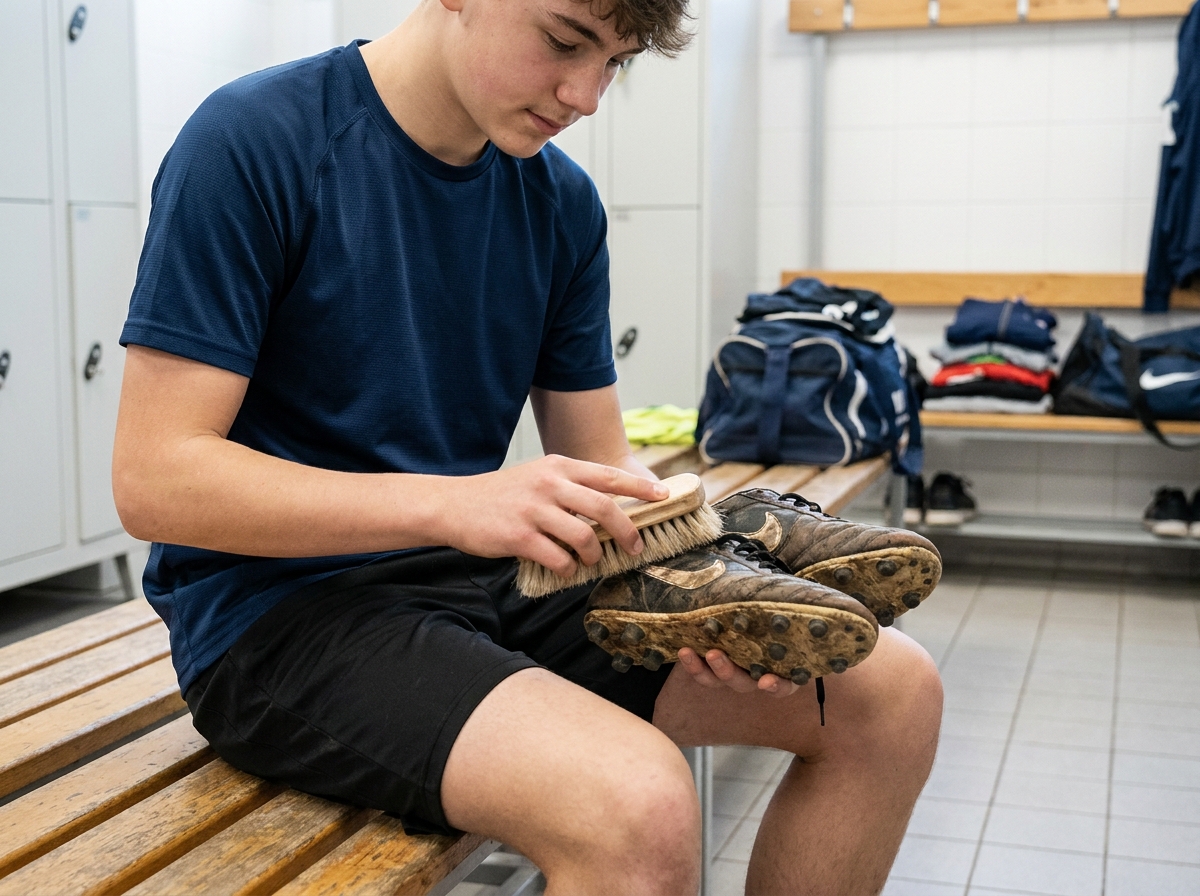
The maintenance routine begins as soon as you leave the pitch. It’s best to remove dirt, grass, and other residues immediately, using a soft brush suitable for the shoe material: soft bristles for leather, firmer fibers for synthetic. Before cleaning, remember to remove the laces and removable insoles to prevent moisture from settling and to access all areas more easily.
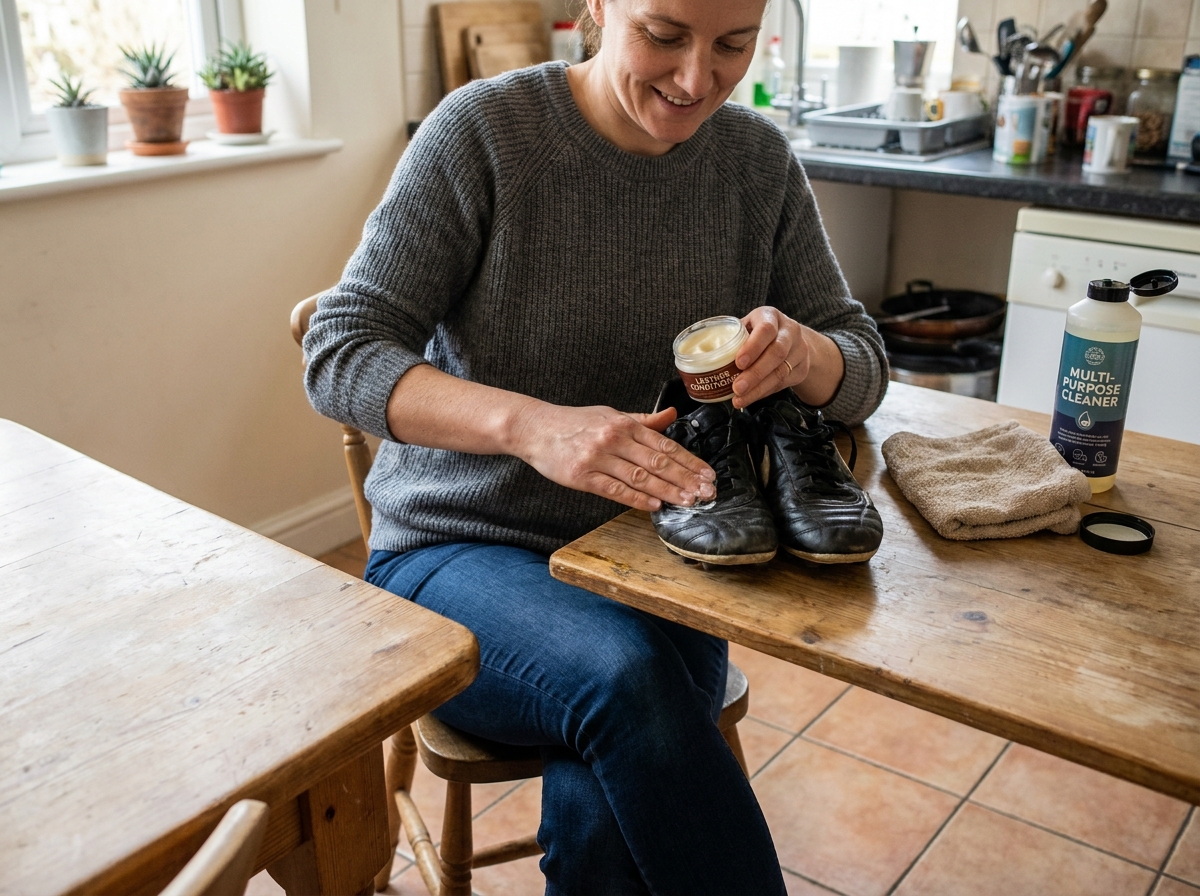
Prepare slightly soapy lukewarm water, preferably with Marseille soap: it’s gentle, effective, and safe for the materials. Dampen a clean cloth or a soft sponge, then gently rub the surface, without soaking the leather or mesh. To reach corners or grooves, a soft toothbrush becomes very useful. Leather cleats deserve extra attention: a specific nourishing cream will restore their flexibility and robustness.
Drying, often neglected, makes all the difference. Insert newspaper or, even better, a wooden shoe tree inside. This helps maintain the shape of the shoe and absorbs residual moisture. Let them air dry, away from radiators or direct sunlight, to avoid any deformation or cracking.
To limit bad odors, a bit of baking soda or a suitable antibacterial spray is sufficient. Then, store your shoes in a dry, ventilated place, away from light and moisture. This ritual, repeated after every match or training session, keeps your cleats in shape and ready to meet all the challenges of the season.
Common mistakes to avoid and tips to extend the lifespan of your shoes
The temptation to throw your cleats in the washing machine is strong. However, this reflex irreparably damages the materials: heat, shocks, and detergent attack leather, mesh, or synthetic. Nothing replaces the patience of manual cleaning, done carefully and according to the material.
Some detergents promise spectacular results, but they damage the fibers, dry out the leather, and weaken the sole. A gentle soap and a bit of lukewarm water are more than enough: it’s better to prioritize simplicity and effectiveness over chemistry at all costs.
Using your shoes on unsuitable surfaces, such as asphalt or concrete, accelerates their wear and can even break the cleats. It’s best to reserve your match pairs for the grass and keep a dedicated pair for travel or sessions on hard surfaces.
Here are some practical tips to keep in mind to ensure the longevity of your shoes:
- Storage: after exertion, avoid leaving shoes in a closed bag. Stagnant moisture promotes mold and odors. Prefer a dry, ventilated space away from light.
- Regular maintenance: a simple cleaning after each use, proper drying, and a quick check of the seams can prevent many problems and extend the lifespan of each pair.
- Shoe tree for leather: for leather models, a shoe tree helps preserve shape and prevents moisture from deforming them.
Taking care of your football equipment is choosing consistency and rigor. Every gesture counts, and in the long run, these are what make the difference between shoes that last the season… and those that stop along the way.