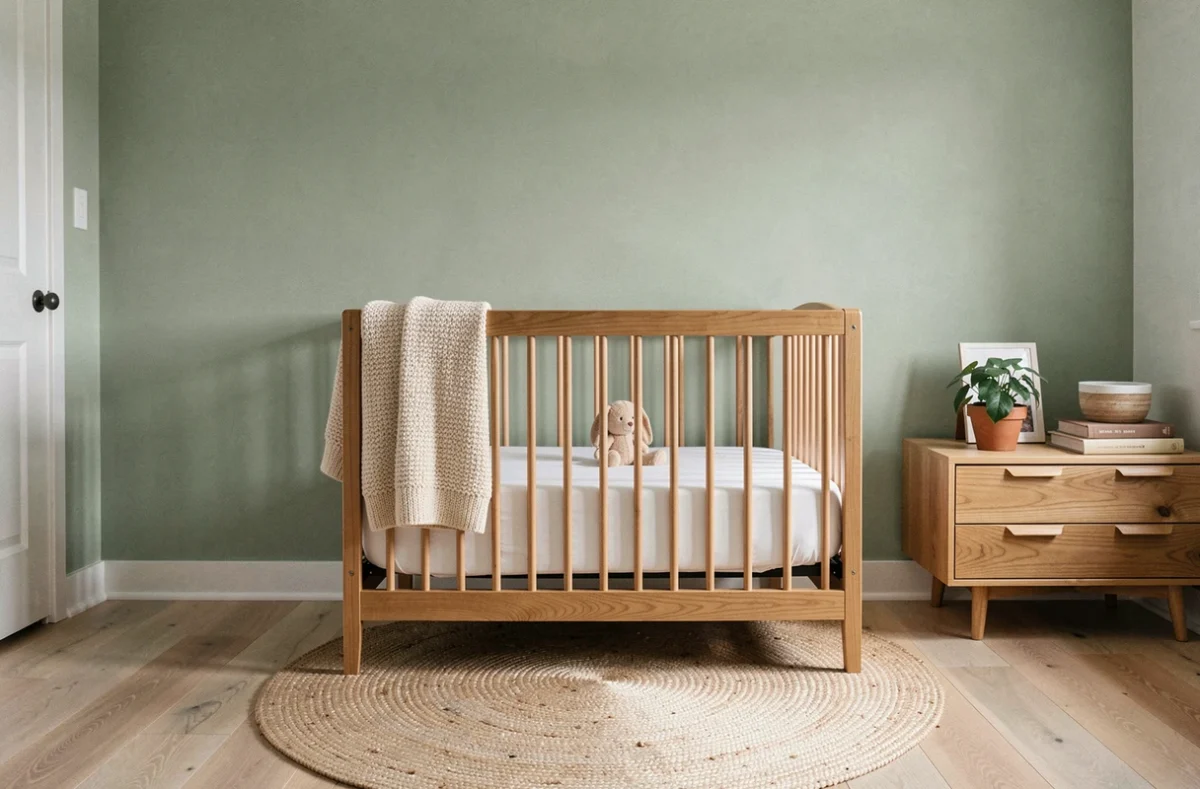
Putting an infant to sleep in the parents’ bedroom during the first few weeks seems natural. Night feedings, monitoring sleep, the need for closeness: everything encourages keeping the crib close to the bed. Then comes the moment when every parent wonders at what age to move the baby to their own room, and especially how to organize this transition without increasing wake-ups.
Parents’ bedroom or individual room: two distinct learnings
A point that is often confused deserves to be clearly stated. Self-soothing and changing rooms are two separate subjects. A baby can very well learn to fall asleep alone in their own bed while still remaining in the parents’ room.
In practical terms, working on self-soothing involves placing the baby drowsy but awake and letting them find sleep without being held or rocked. This work can begin well before the question of moving to their room arises. To better understand at what age to move the baby to their room, it is useful to distinguish these two steps.
Separating the two steps has a practical advantage: the baby only has one change to adapt to at a time. First, they get used to falling asleep in their bed. Then, that bed changes rooms. Combining both on the same night means asking them to manage a new environment and a new skill simultaneously.
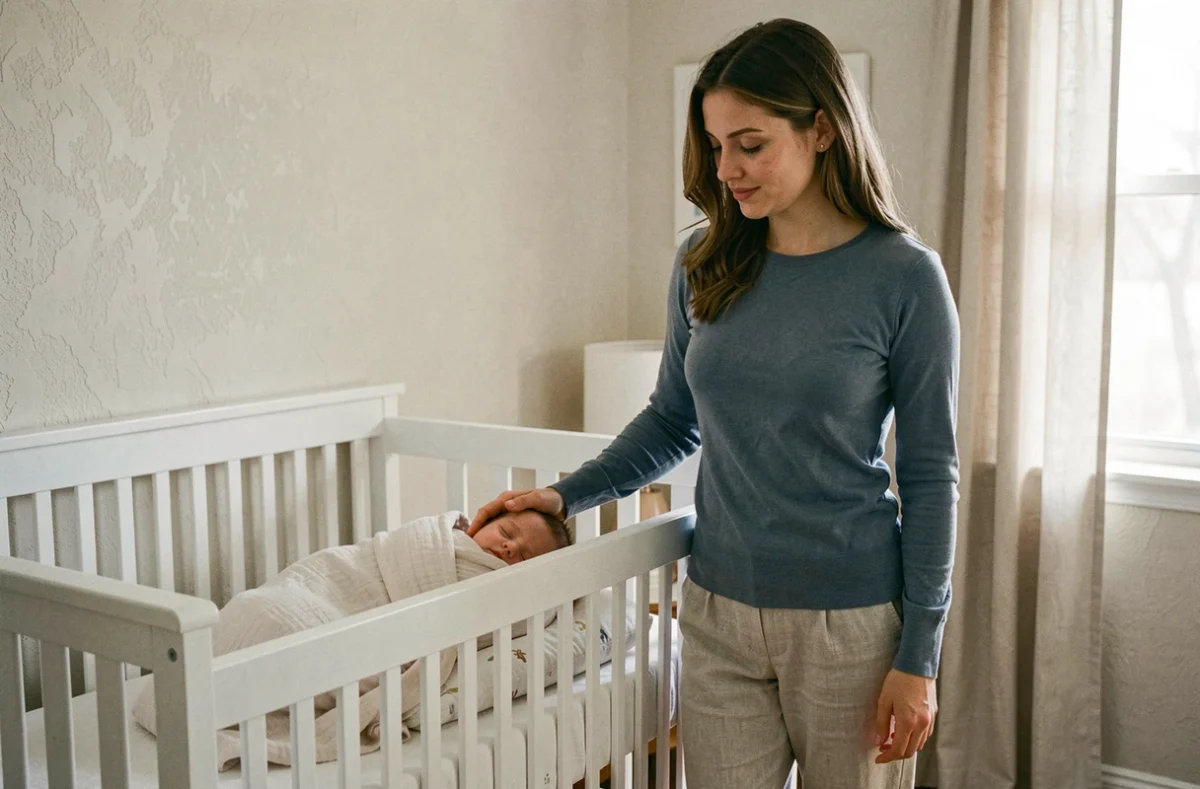
Six-month milestone for the transition to their room
The American Academy of Pediatrics recommends sharing a room with the infant, on a separate sleeping surface, ideally for at least the first six months. This recommendation aims to reduce the risk of sudden infant death syndrome, not for comfort or family organization.
After this period, there is no deadline that sets a maximum age for making the transfer. The move to an individual room then depends on each family’s specific situation: parents’ sleep quality, available space, baby’s temperament.
Why this is not a deadline
You may have noticed that a five-month-old baby and another of the same age can have radically different sleep patterns? Some have long stretches of nighttime sleep, while others still wake up several times. The six-month milestone is a safety threshold, not an automatic signal to move.
A baby who sleeps peacefully in the parents’ room at seven or eight months poses no problem. Conversely, parents exhausted by mutual micro-wake-ups may consider the transition a bit earlier, provided they maintain safe sleeping rules.
Safety rules to maintain after the room change
The most common pitfall during the transition is to relax precautions. An individual room does not change the fundamentals of safe sleeping. The baby sleeps on their back, on a firm and flat mattress, without a pillow or duvet.
Here are the points to check before the first night in their room:
- The crib is empty: no bumper pads, no large stuffed animals, no loose blankets. A sleep sack suitable for the season is sufficient.
- The mattress fits the crib exactly, with no gaps between the edge and the frame where an arm or leg could get stuck.
- The room temperature is within a comfortable range, neither overheated nor too cold. A baby dressed in a sleep sack does not need additional heating.
- Inclined products (bouncers, positioning cushions) are not alternatives to the crib for nighttime.
A specific risk arises when the parent moves at night for a feeding. Putting the baby back in their crib before falling asleep again remains the safety guideline most repeated by professionals. Falling asleep with the baby on a couch or armchair is identified as particularly dangerous.

Organizing the transition without waiting for full nights
Many parents postpone the transfer, waiting for the baby to “sleep through the night.” This wait can last a long time. The transition can be made even if the baby still wakes up once or twice a night.
The change of room does not eliminate nighttime awakenings, but it does not worsen them in most cases. A baby who woke up to feed will continue to wake up, whether the crib is two meters away or in the next room.
A gradual method that works
Start with naps. For a few days, the baby sleeps during the day in their room and returns to the parents’ room at night. They become familiar with the sounds, light, and smell of the room without the nighttime separation coming into play.
Then move on to nights. During the first nights, stay in the room for a few minutes after placing the baby down. Gradually reduce your presence. The baby monitor takes over, not your ear pressed to the door.
A stable bedtime ritual helps more than any elaborate technique. The same actions, in the same order, every evening (bath, pajamas, story or song, lights out) signal to the baby that it is time for sleep, regardless of the location.
What really changes when the baby sleeps in their room
The first effect noticed by most families is not on the baby, but on the parents. The micro-wake-ups caused by the baby’s noises (grunts, movements, loud breathing) disappear. Parental sleep quality improves, which enhances patience and availability the next day.
For the baby, the adjustment usually takes a few nights. Crying at bedtime, if it occurs, is often related to the novelty of the environment rather than deep distress. It decreases as the room becomes a familiar place.
The question of the right timing does not have a single answer. The six-month milestone sets a minimum safety guideline; the rest depends on each person’s sleep, housing configuration, and the baby’s temperament. A well-prepared transfer, with respected sleeping rules and a consistent ritual, goes better than a rushed transfer at the “right” theoretical age.